Electric vehicles are becoming common in Indian cities. As adoption increases, many owners prefer charging their cars at home instead of depending on public infrastructure. Home EV charging offers better control, lower running cost, and daily convenience, especially in urban environments.
If you live in India and plan to install a home electric car charger, there are several practical factors you should understand before making a purchase. For a broader overview of EV charging solutions, you can explore our EV charger India page.
Why Home EV Charging Makes Sense in India
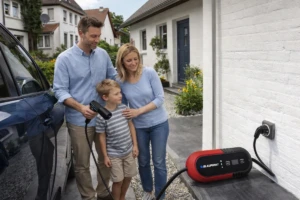
Most city driving in India involves short daily distances. Overnight charging at home is enough for regular use. Home charging also avoids queues at public charging points and reduces dependency during peak hours.
For apartment residents and villa owners, a dedicated home charging station improves long term ownership experience and cost predictability.
Power Supply and Electrical Readiness
Indian homes have varying power capacities. Before installing a home EV charger, it is important to check your sanctioned electrical load. A charger that exceeds your available capacity can cause power trips and safety risks.
Apartments usually require permission from the housing association.Some buildings already support EV charging, while others may need upgrades such as dedicated circuits or load management.
Professional assessment ensures safe and compliant installation.
Choosing the Right Home EV Charger
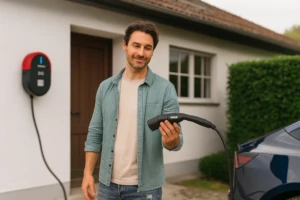
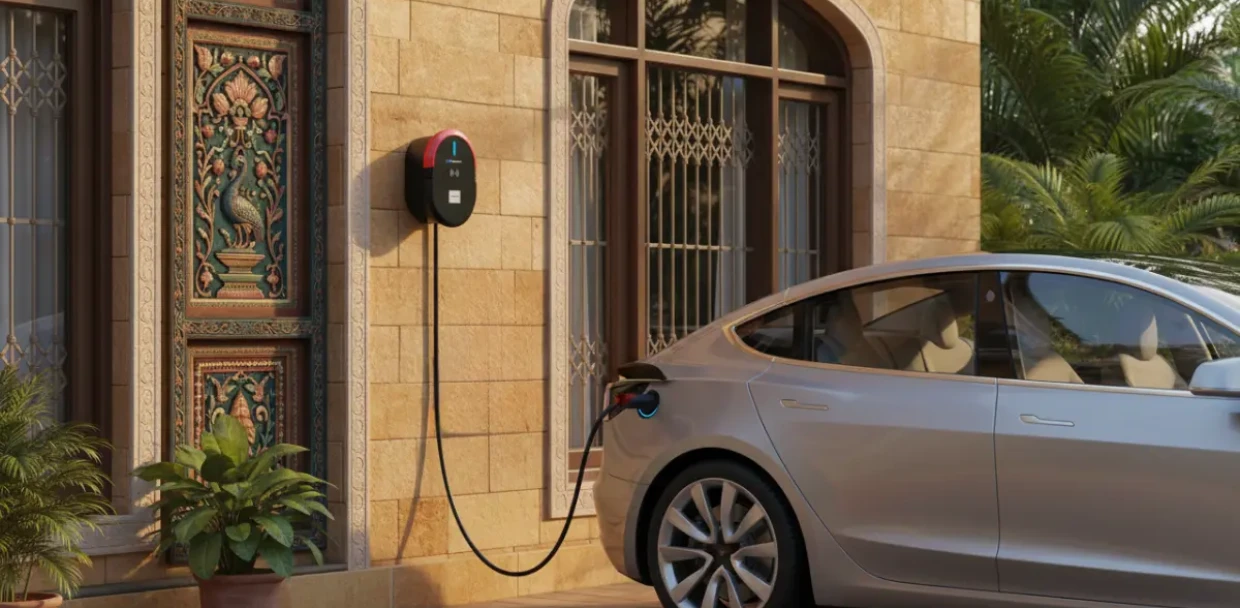
For most Indian households, an AC wall mounted charger is suitable. It supports overnight charging and aligns with residential electricity usage. Faster chargers may increase installation complexity without real benefit.
A good home charger should handle voltage fluctuations and provide stable performance during long charging sessions. You can also explore different options on our EV charger India page.
Installation Challenges in Urban Apartments
Installing a charger in an apartment involves parking location, distance from the electrical panel, and shared infrastructure. Longer cable runs increase installation effort and cost.
Some societies require separate metering for EV charging. Others allow charging through the existing domestic connection. Understanding these rules early helps avoid delays.
Cost of Home EV Charging in India
Home EV charging is generally more economical than public charging. Residential electricity tariffs make overnight charging cost effective over time.
The total cost includes the charger unit, installation work, safety components, and testing. Planning the installation properly avoids future rewiring expenses.
Safety and Climate Considerations
Indian conditions include high temperatures, dust, and monsoon humidity. EV chargers must be designed to operate reliably in these environments.
Essential safety features include thermal protection, short circuit protection, grounding, and weather resistant enclosures. These protect both the vehicle and the home electrical system.
Importance of Certified EV Chargers
Uncertified chargers may appear affordable but often lack proper safety controls. This can lead to overheating, unstable charging, or long term battery damage.
Certified EV chargers ensure controlled power delivery and compliance with Indian electrical standards.
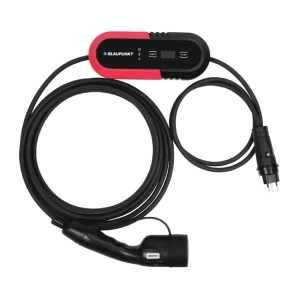
Blaupunkt EV chargers are built to support Indian residential use with a focus on safety, durability, and consistent performance.
Planning for Future EV Needs
EV ownership in India will continue to grow. A future ready home charger supports newer vehicles and higher charging demands without replacement.
Choosing a reliable charger today helps you stay prepared as technology evolves.
Who Benefits Most from Home EV Charging
Home charging is ideal for daily commuters, apartment residents with dedicated parking, families with multiple vehicles, and users who prefer predictable charging routines. For these users, a home EV charging setup offers long term convenience and control.
Home EV charging is becoming a necessity in Indian cities. Understanding power capacity, installation requirements, safety standards, and long term usage helps you make the right decision.
A well planned setup ensures reliable charging, lower operating costs, and a smoother transition to electric mobility in India.
To explore complete solutions and product options, visit our EV charger India page.